

Monterrey
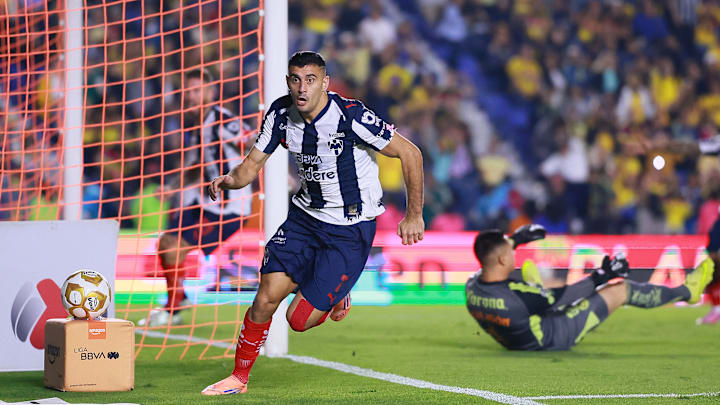
1. Germán Berterame – The Clutch Finisher
Berterame was the hero of Monterrey’s qualification run. His goal at 90+3’ against América wasn’t just decisive — it was a display of timing, instinct, and elite positioning.
Throughout the series, he contributed with relentless pressing, smart movement between defenders, and the ability to appear exactly when the team needed him most. Monterrey’s semifinal ticket has his signature all over it.
Berterame el 4to mejor anotador en Liguillas de @Rayados
— Futbol Fino (@Futbol_Fino) December 1, 2025
Con el gol anotado al América, Germán Berterame superó por un gol a Aldo De Nigris y se coloca como el 4to goleador de Rayados en Liguilla.
Así va el ranking histórico en Liguilla;
18 Rogelio Funes Mori
17 Humberto Suazo… pic.twitter.com/8T5Ma1J8i5
2. Sergio Ramos – Defensive Leadership and Big-Game Presence
Ramos brought exactly what Monterrey needed in a tight series: experience, composure, and expert defensive reading. His leadership in the back line helped steady the team during América’s most dangerous stretches.
Aerial duels, clearances under pressure, and his command of the defensive line were crucial to keeping Monterrey alive until Berterame’s decisive moment. Ramos gave Monterrey the confidence and stability required in knockout football.
3. Sergio Canales – Midfield Control and Creativity
Canales was the cerebral anchor of Monterrey’s approach. His ability to slow the game down, dictate possession in difficult stretches, and break lines with incisive passes allowed Monterrey to maintain balance even when América pushed aggressively.
He served as the emotional and tactical connector between defense and attack, ensuring the team never lost structure.
Toluca
1. Paulinho – Forward
Despite missing some key scoring opportunities in the second leg against Juárez, Paulinho remained Toluca’s most active and dangerous attacking outlet. His mobility, pressure, and ability to generate chances—even when he doesn’t score—were vital for keeping the team threatening and dictating the attacking pace of the series.
2. Marcel Ruiz – Midfielder
Ruiz has been the silent engine of Toluca. His work controlling midfield spaces, circulating possession, and pressing at the right moments helped Toluca maintain balance. His role in stabilizing the midfield during a defensive-heavy second leg was essential to securing the aggregate result.
3. Collective Defensive Structure
With Alexis Vega sidelined due to injury, Toluca’s defense became the true protagonist. Their disciplined, compact, and patient approach in the second leg—especially during long stretches without the ball—was the cornerstone of their qualification. The back line and holding midfielders executed Mohamed’s tactical plan almost flawlessly.
Cruz Azul
1. Carlos Rodriguez – Winger
Rodriguez continues to be one of Cruz Azul’s most impactful players. Across two legs against Chivas, Rodriguez has created six chances for his team. The Mexican midfielder completed three dribbles after two games vs Chivas.
In the second leg, he provided an assist and scored a beautiful chip in the last minute to secure the win and qualification to the semifinals for Cruz Azul.
2. Ángel Sepúlveda – Striker
Sepúlveda brings both goals and work rate. His intelligent positioning and aggressiveness inside the area make him a constant threat. He also contributes defensively by pressing from the front and helping Cruz Azul maintain compactness during transitions.
3. Gonzalo Piovi – Defender
Piovi anchored the defensive unit with strong tackles, aerial dominance, and leadership. His stability at the back allowed Cruz Azul to absorb pressure effectively. In knockout games, his presence becomes even more valuable, helping the team maintain composure under stress.
Tigres
1. Juan Brunetta – The Creative Engine
Brunetta has been Tigres’ most dominant player in this phase of the tournament. His ability to dictate tempo, break defensive lines, and generate constant danger in the final third makes him the central figure of the team’s attack. Whether through long-range shots, decisive passes, or accelerating transitions, Brunetta is the player who transforms Tigres’ possession into a real threat.
2. Ángel Correa – The Difference-Maker in the Attack
Correa has added a new dimension to Tigres’ offensive structure. His mobility between lines, quick combinations, and ability to attack spaces behind defenders make him a constant problem for opposing backlines.
Correa’s versatility allows him to float across the frontline: he can drop to build play, run in behind, or appear inside the box to finish chances. His energy, intensity, and ball-carrying have elevated Tigres’ attacking fluidity and unpredictability.
3. Juan Pablo Vigón – The Complete Midfield Balance
Vigón continues to be the glue of Tigres’ system. His defensive work covers large areas of the pitch, and his ball recoveries often initiate attacks. Beyond that, his intensity, timing on late runs, and leadership make him essential in both phases of the game. He provides the balance that allows Brunetta and Correa to play freely without compromising the team’s structure.
¡Así le fue a los Semifinalistas en sus duelos directos! 🥊
— TNT Sports México (@tntsportsmex) December 1, 2025
Cruz Azul fue el equipo que más puntos sumó en los enfrentamientos entre los 4, con 7 unidades. 📊
Monterrey apenas logró conseguir uno. 🔥 pic.twitter.com/BjHFvINsqs
Comparative Analysis: The Four Semifinalists
Monterrey vs. Toluca
Monterrey relies more on individual talent—technical leaders like Canales and Vázquez elevate their attack with creativity and precision. Toluca, on the other hand, based their qualification on structure and defensive discipline, especially with Vega injured. Rayados have more offensive firepower; Toluca has the stronger collective block.
Cruz Azul vs. Tigres
Cruz Azul’s progression is rooted in intensity, transitions, and two-way forwards like Antuna and Sepúlveda. Tigres bring experience, star power, and a slower but deadly possession game built around Gignac and Córdova. Cruz Azul feels more dynamic; Tigres feels more clinical and experienced.
Tigres ha superado 4 de las 6 eliminatorias que han disputado frente a Cruz Azul en Liguilla 🤯 pic.twitter.com/Nk1SMU42xI
— Tigres Mxnda 🐯 (@tigresmxndablok) December 1, 2025
Across All Four
- Most offensive depth: Monterrey
- Most disciplined and tactical: Toluca
- Most balanced transitions: Cruz Azul
- Most experienced and decisive in big games: Tigres
Monterrey and Tigres stand out for elite individual players, while Toluca and Cruz Azul rely more on structure and collective execution. This contrast makes the semifinal round particularly intriguing, as each team brings a completely different style and identity.
Which of these four semifinalists do you think arrives in the strongest form for the next round?
Read More:
- Liga MX Apertura 2025 Semifinals locked in After Cruz Azul’s 3-2 win over Chivas
- Elias Montiel on the verge of stunning move to Real Oviedo of La Liga
- Atlas FC sale rumors: McLaren and Bahrain Mumtalakat Involved
 Add us as a preferred source on Google